
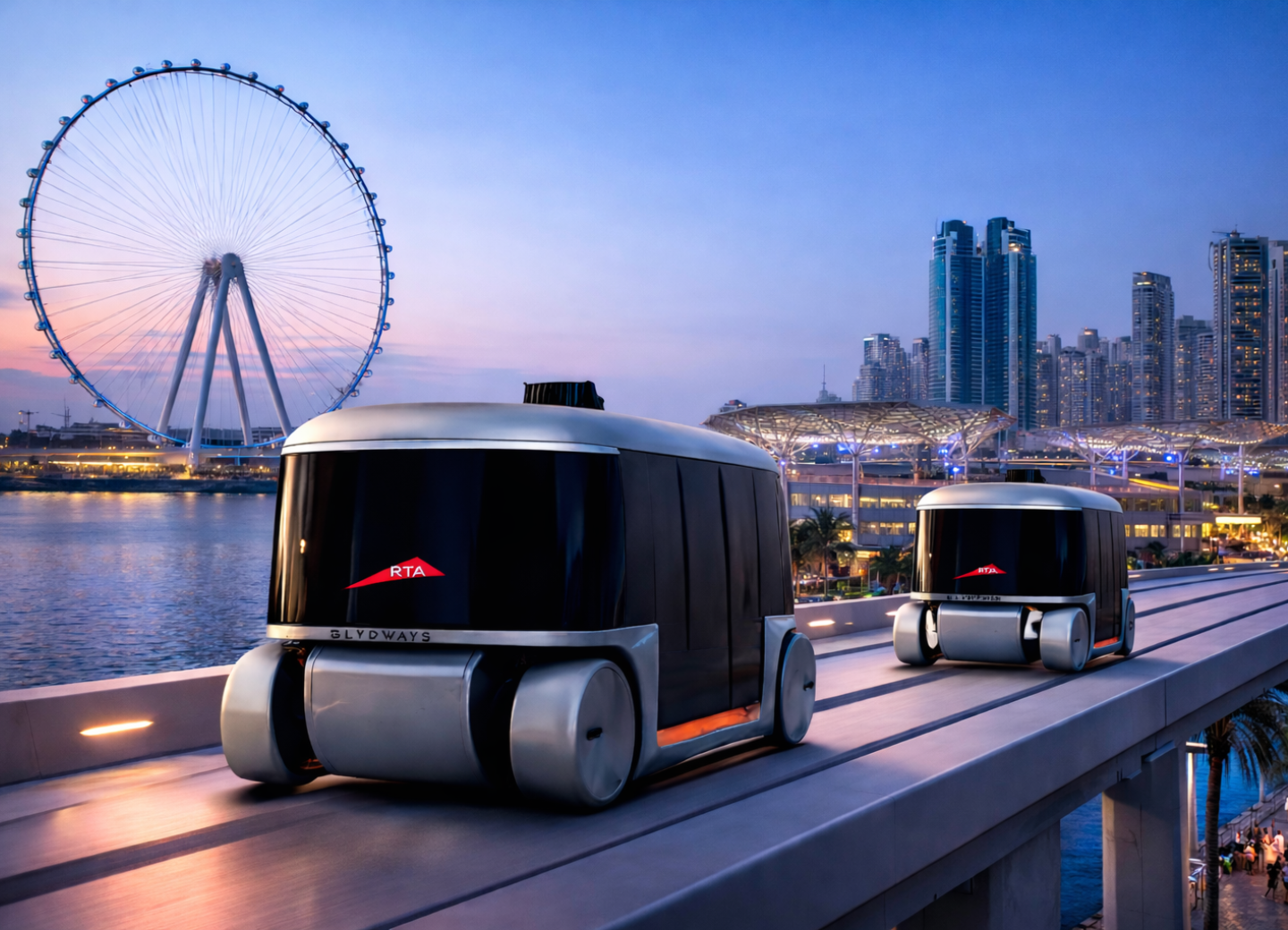
Dubai is once again redefining the future of transportation. With the introduction of Dubai self-driving pods, the city is moving closer to a traffic-free, smart mobility ecosystem designed for efficiency, sustainability, and convenience.
The Roads and Transport Authority (RTA) launched this Dubai driverless transport system at the World Governments Summit 2026. The initiative introduces small, autonomous electric pods that operate independently of road traffic and reflects Dubai’s wider vision to lead global innovation in urban transport.
Here’s a closer look at how Dubai self-driving pods work, where they will operate, and why they matter for the future of urban mobility.
What Are Dubai’s Self-Driving Pods?
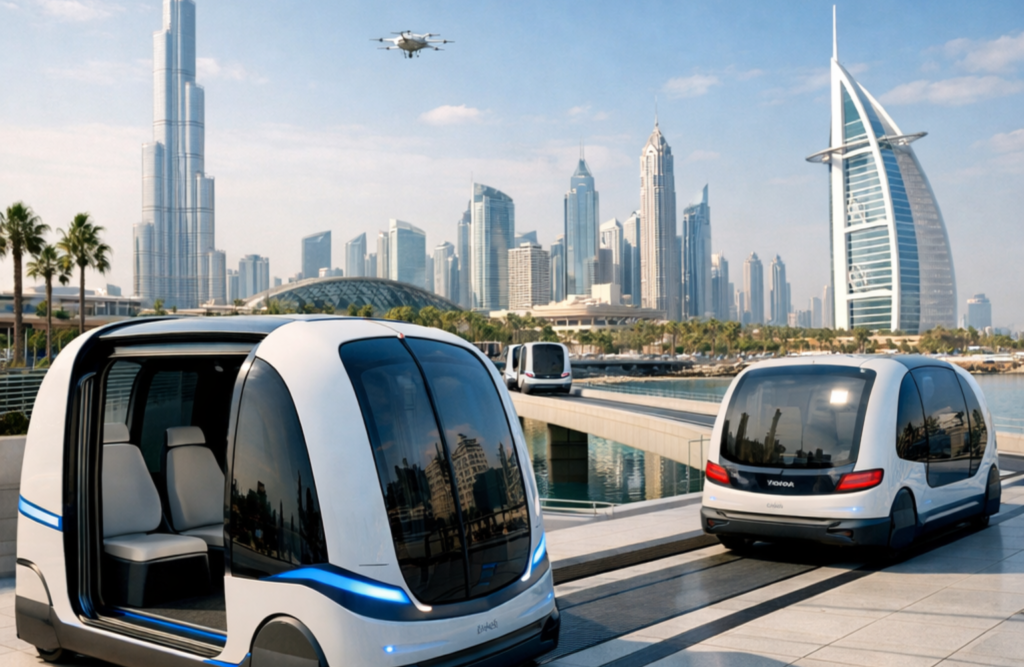
The Dubai self-driving pods are enclosed, autonomous electric vehicles developed by US-based technology company Glydways. Each pod seats between four and six passengers and supports short-distance travel.
These self-driving electric pods run on narrow, dedicated guideways rather than public roads. As a result, they avoid traffic entirely. The pods travel at speeds of up to 50 km/h and cover approximately 250 km on a single charge.
Most importantly, this autonomous transit system supports last-mile connectivity by linking metro stations to nearby destinations quickly and efficiently.
Where Will the Driverless Pods Operate in Dubai?
Initially, the self-driving pod network in Dubai will launch across four key locations. Each route improves metro connectivity and reduces short car trips.
1. Bluewaters Island
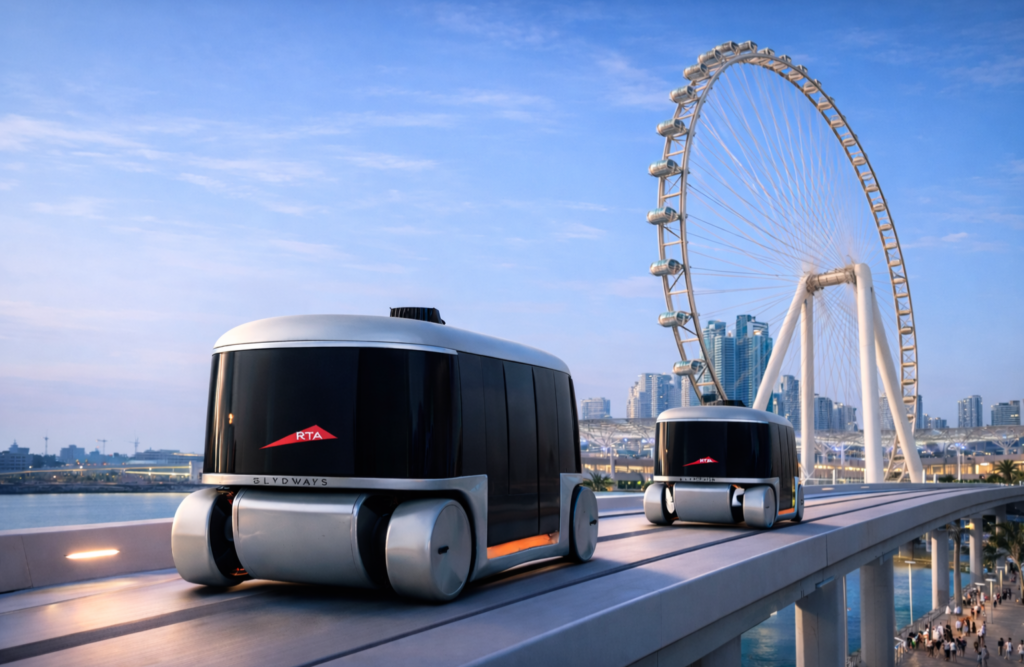
Route length: 2.8 km
Connects National Paints Metro Station to Bluewaters Island
This route will serve as the trial route for the system.
2. Umm Suqeim
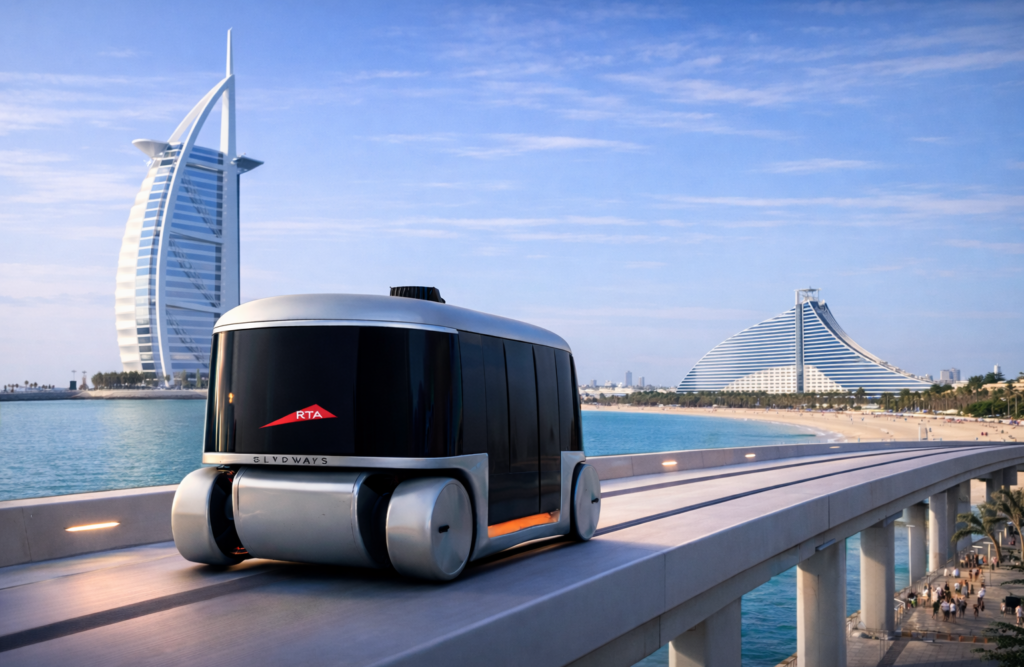
Route length: 1.9 km
Connects Mall of the Emirates Metro Station to Madinat Jumeirah
3. Al Quoz
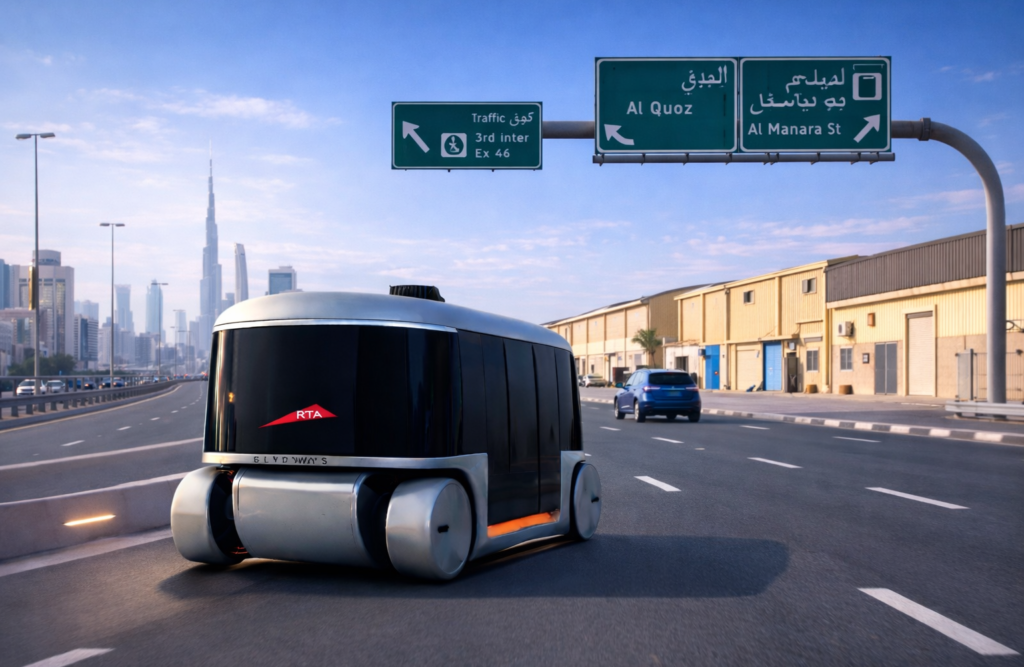
Route length: 2.6 km
Connects OnPassive Metro Station to Alserkal Avenue and Times Square Centre
4. Dubai Festival City
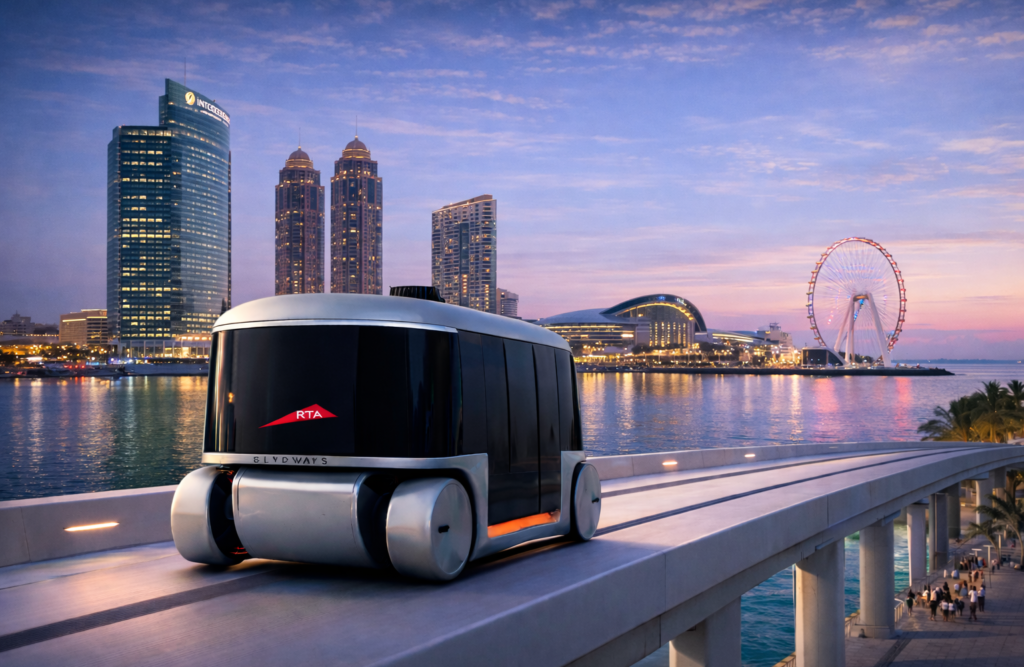
Route length: 7 km
This is the longest route, with potential future links to the Dubai Metro Blue Line.
Together, these corridors form the foundation of Dubai autonomous transport focused on daily commuting and lifestyle access.
How the Autonomous Pod System Works
Unlike traditional public transport, Dubai autonomous pods operate on compact guideways roughly the width of a bicycle lane. Authorities can install these guideways:
Along existing roads
Above ground
Or underground
The system requires no additional tracks or overhead wiring. This approach makes the autonomous guideway system faster and cheaper to deploy.
Additionally, the pods operate fully autonomously. Passengers can scan tickets, request assistance, or activate an SOS button inside the vehicle. The system supports on-demand use and offers flexible, direct travel.
Capacity and Cost Benefits of Dubai Self-Driving Pods
The RTA estimates that the Dubai urban mobility pods can transport over 10,000 passengers per hour in each direction. This capacity rivals traditional rail systems, despite the use of much smaller infrastructure.
From a cost perspective, the benefits are significant:
Capital costs are estimated to be 90% lower than conventional transit systems
Operational costs could be reduced by up to 70%
As a result, this autonomous public transport in Dubai offers a scalable and cost-efficient solution for growing urban areas.
Why Dubai Is Investing in Driverless Pods
Dubai has long positioned itself as a leader in smart mobility solutions. The launch of Dubai driverless pods aligns with broader goals around:
Reducing traffic congestion
Improving last-mile connectivity
Promoting sustainable urban transport
By introducing a traffic-free transport system, the city reduces reliance on cars for short trips. This approach directly supports environmental goals and improves quality of life.
Moreover, the pods complement existing transport networks rather than replacing them. They enhance metro access while filling gaps that buses or trams cannot efficiently cover.
Dubai’s focus on innovation is consistent with other world records in UAE that have positioned the country as a global leader in smart infrastructure and futuristic development.
What Dubai Self-Driving Pods Mean for the Future of Transport
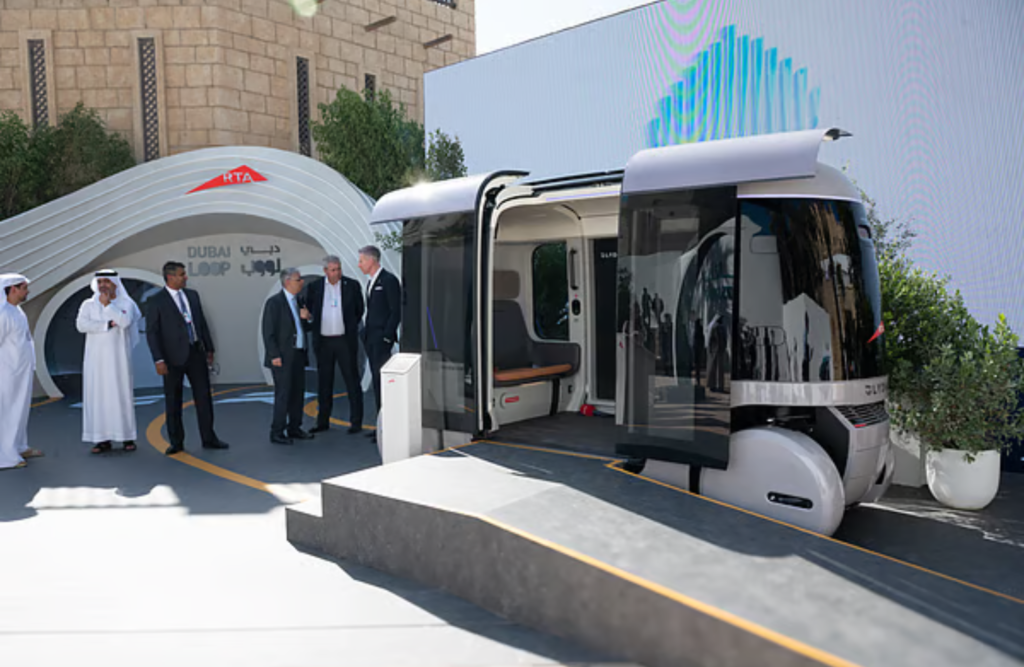
The Dubai self-driving pod network signals a shift toward flexible, on-demand public transport. Instead of large vehicles running fixed routes, the system focuses on personalized, efficient travel.
As Dubai continues to grow, urban transport innovation will remain critical. Autonomous mass transit systems like this allow infrastructure to expand without major disruption.
In the long term, authorities could deploy these pods across more districts, residential zones, and commercial hubs, forming a citywide autonomous mass transit layer.
Final Thoughts on Dubai Self-Driving Pods
The launch of Dubai self-driving pods marks a major step forward in the emirate’s transport evolution. By combining electric autonomous vehicles, compact infrastructure, and seamless metro connectivity, Dubai is building a future-ready mobility system.
As trials begin and routes expand, these pods are expected to play a key role in shaping future transport in Dubai, offering residents and visitors a cleaner, smarter, and truly traffic-free way to move around the city.
FAQs:
They are autonomous electric pods designed for short-distance, traffic-free travel using dedicated guideways.
Each pod can seat between four and six passengers.
Bluewaters Island, Umm Suqeim, Al Quoz, and Dubai Festival City.
Yes. They are electric autonomous vehicles designed for sustainable urban transport.
If the pilot succeeds, authorities may explore similar autonomous pod systems in other emirates as part of broader UAE smart mobility plans.
While the system currently focuses on last-mile travel, future expansions or parallel networks could help reduce congestion along key Dubai–Sharjah commuter routes.



 WhatsApp