

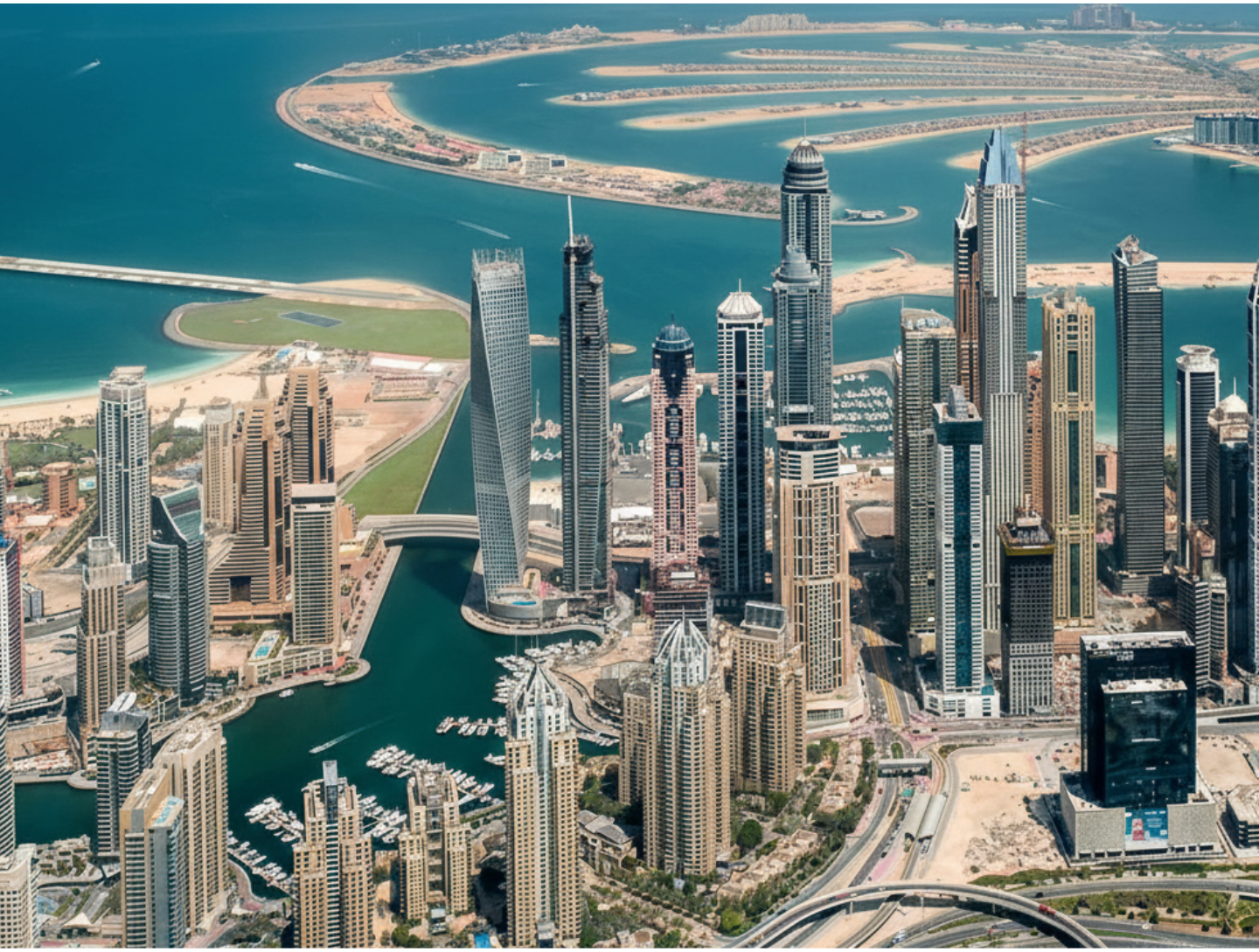
Search trends are rising around one big question in the Dubai property market forecast 2026: is the real estate market crashing, or are prices simply normalizing after a strong growth cycle? Investors, buyers, and analysts continue to debate whether Dubai property prices will fall or stabilise in the coming year.
The truth is more nuanced. Market signals today suggest a correction phase in certain segments, not a full market crash. At the same time, this shift may create selective investment opportunities. To understand the Dubai real estate market outlook for 2026, we need to look at data, regulation, supply, and demand, not just headlines.
Let’s break it down clearly.
Dubai Real Estate Market Performance Before 2026
Over the last few years, Dubai real estate has seen strong transaction activity and price growth. Sales volumes reached record levels across multiple quarters. Both off-plan and ready property segments attracted local and international investors.
Transaction counts crossed major milestones, and total deal values increased sharply. Luxury homes, villas, and branded residences saw particularly strong demand. As a result, Dubai property prices moved up faster in some communities than others.
However, rapid growth is often followed by a cooling phase. That is normal in every mature property cycle. Therefore, many analysts now expect a Dubai property market correction rather than continued steep price acceleration.
A correction does not mean the market is broken. Instead, it often signals stabilization.
Crash vs Correction: Why the Terms Should Not Be Confused
Many people use the words crash and correction interchangeably. Yet they describe very different situations.
A real estate crash usually involves panic selling, financing breakdowns, and widespread price collapse. A correction, on the other hand, is more controlled. Prices adjust. Demand slows slightly. Strong assets hold better than weak ones.
Current Dubai real estate trends for 2026 point toward segment-based correction, not citywide collapse. Some micro-markets may soften due to new supply. Others may remain stable because of limited availability and strong end-user demand.
Therefore, the Dubai real estate correction vs crash discussion must be based on structure, not emotion.
Why Dubai’s Market Structure Is Stronger Than Past Cycles
Many crash fears come from memories of 2008. However, the Dubai property market operates very differently today.
Regulation is tighter. Oversight is stronger. Investor protection is more formalized. Dubai Land Department and RERA introduced strict controls after the global financial crisis. These rules changed how projects launch and how funds are handled.
Today, off-plan projects must follow escrow protection rules. Developer approvals are required before launch. Construction progress controls how funds are released. This reduces systemic risk.
Buyer profiles have also evolved. Earlier cycles had more short-term speculators. Now the market includes long-term investors, relocating families, and golden visa applicants. That creates a more stable base demand.
What Drives the Dubai Property Market in 2026
Despite the correction talk, demand drivers remain active. Dubai continues to attract global entrepreneurs, investors, and high-net-worth individuals. Business migration and wealth migration both support housing demand.
Population growth is another factor. Dubai’s resident base is far larger than it was during earlier cycles. More residents create a steady need for housing across multiple price points.
Several policy and economic drivers support demand:
- Golden visa through property investment
- Business setup, growth, and relocation
- Tax-efficient residency structure
- Dubai D33 economic expansion agenda
- Long-term urban plans like Master Plan 2040
Because of these drivers, the Dubai real estate forecast 2026 cannot be judged on price charts alone. Structural demand matters.
Where Correction Risk Is More Likely
Not every segment behaves the same way. Supply distribution is uneven across Dubai communities. Some locations have heavy upcoming inventory, especially in smaller apartment categories.
When too many similar units launch together, short-term resale pressure increases. This is more common in investor-heavy off-plan clusters. In such areas, price sensitivity is higher.
By contrast, areas with limited land, strong connectivity, or lifestyle appeal tend to hold value better. Villa communities and prime waterfront zones often show more resilience.
So, Dubai real estate demand vs supply should be analyzed at the micro-market level, not citywide average.
Off-Plan vs Ready Property in the 2026 Market
Off-plan property still dominates new launches in Dubai. Flexible payment plans make entry easier. However, buyers must be selective. Not every off-plan project carries the same risk profile.
Delivery timelines, developer track record, and build quality matter more during correction phases. Ready property, meanwhile, offers immediate rental yield and clearer price discovery.
Smart investors compare both options carefully. They evaluate rental demand, exit liquidity, and long-term area growth before committing capital.
This approach reduces exposure during Dubai property market slowdowns.
Investors comparing risk often evaluate off-plan apartments in Dubai against ready properties based on yield, liquidity, and delivery timelines.
Demand for Property Niche where Supply is Limited
One consistent real estate principle is scarcity. When supply is limited and demand is stable, price volatility is lower. In Dubai, scarcity appears in certain categories. For example, villa supply remains lower than apartment supply. Family migration is rising. That creates sustained demand for larger homes.
Similarly, branded residences and prime waterfront projects often attract long-term buyers rather than short-term flippers. That supports pricing stability.
Therefore, Dubai luxury property and villa segments may behave differently from high-volume apartment clusters during correction periods.
Investor Safety Is Higher Today
Investor safety in today’s Dubai real estate investment environment is significantly stronger than it was in earlier market cycles. After the lessons of the 2008 downturn, authorities introduced tighter controls and more structured oversight across the property sector. Dubai Land Department (DLD) and RERA implemented layered regulatory systems that focus on transparency, fund protection, and developer accountability. As a result, the way projects are launched, funded, and delivered is now far more controlled.
This has improved overall market credibility and increased confidence among both local and international investors.
One of the most important protections is the mandatory escrow account system for off-plan projects. Under this framework, buyer payments are deposited into regulated escrow accounts instead of going directly to developers. Funds are then released in stages based on verified construction progress. This reduces misuse of capital and limits the risk of stalled projects due to fund diversion.
In addition, project registration requirements ensure that developers cannot legally market or sell units without approvals, land ownership clarity, and financial compliance in place.
Is 2026 a Bad Time, or a Smart Entry Window?
Many investors ask whether they should wait. However, timing markets perfectly is difficult. Strategy matters more than headlines.
Correction phases often create negotiation power and better entry pricing. Investors who focus on fundamentals, location, developer strength, and rental yield often benefit most.
Short-term speculation is risky in any market. Long-term income-focused buying is more resilient. Dubai rental yields also remain comparatively attractive versus many global cities.
So the better question is not “Is Dubai real estate crashing?” Instead, ask, “Which Dubai properties still make financial sense in 2026?”
Current evidence suggests the Dubai real estate market in 2026 is more likely to enter a selective correction phase rather than a crash scenario. Regulation is stronger. Demand drivers remain active. However, supply pockets will create pressure in some areas.
That makes market selection more important than ever.
For disciplined buyers, correction periods often reveal the best long-term opportunities. Fear reduces competition. Careful analysis improves outcomes. And patient capital performs better than reactive capital.
In real estate, opportunity rarely appears when sentiment is comfortable. It appears when sentiment is uncertain, but fundamentals are still intact.



 WhatsApp